-1.png?width=702&height=262&name=Integra%20White%20(1)-1.png)
Apparel That Actually Represents You — From One Shirt to a Thousand
Whether you're outfitting a sales team, gearing up for a 5K, or sending a new hire their first hoodie, we help you land on the right garment, the right decoration method, and a look that actually gets worn. From a single embroidered polo to a thousand event tees, the process is the same: get it right the first time.
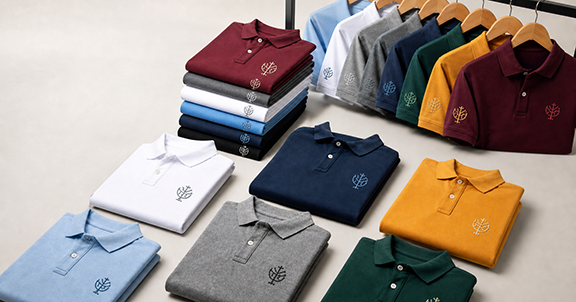
Why Companies Trust Us With Their Apparel
Method Matched to Garment
Not every decoration works on every fabric. We help you avoid the mismatch before it becomes a reprint.
Real People Answer
No ticket queue. You'll talk to the same person from first quote through reorder.
Consistent, Order After Order
Your logo should look the same on shirt #1 and shirt #500. That's the whole point of an easy reorder.
90% Repeat Clients
Most of our apparel customers come back — because the fit, print, and timeline landed right the first time.
Which Decoration Method Is Right for Your Order?
The right method depends on three things: how many colors are in your design, how many pieces you're ordering, and what the garment is made of.
Quick answer: Screen printing wins at bulk quantities with a set number of colors. Embroidery is the standard for polos and corporate wear. DTG and DTF handle full-color designs on smaller runs or one-offs. Sublimation is built for all-over prints on performance fabric. Heat transfer/vinyl is fastest for names and numbers. Embossing adds a raised, tactile logo without ink, laser engraving/etching is a specialty accent for leather patches and trim, and custom patches give you a separately-made emblem you can apply to caps, jackets, and bags.
Screen Printing
How it works
Ink is pushed through a fine mesh screen, one screen per color, directly onto the garment.
Best for
Bulk orders with a set number of colors — team tees, event shirts, retail runs.
Good to know
More colors mean more setup, so it gets more economical as quantity climbs — and stays the most durable, vibrant option for large runs.
Embroidery
How it works
Your logo is digitized into a stitch file and sewn directly into the fabric with thread.
Best for
Polos, outerwear, caps, and uniforms — anywhere a premium, corporate look matters.
Good to know
Holds up to washing and wear better than any printed method — the standard for apparel meant to last years, not one event.
Direct-to-Garment (DTG)
How it works
A specialized printer applies ink directly onto fabric, similar to an inkjet printer, for full-color and photographic designs.
Best for
Detailed, full-color artwork on smaller quantities — including single-piece or one-off orders.
Good to know
Performs best on 100% cotton or cotton-heavy blends. The right call when you need one shirt done right, not a hundred done cheap.
Direct-to-Film (DTF)
How it works
Full-color designs are printed onto a specialty film, then heat-pressed onto the garment.
Best for
Full-color designs across cotton, polyester, and blends, at almost any quantity.
Good to know
Not limited by fabric type or color count like screen printing, making it a strong fit for mixed-garment orders under one design.
Sublimation
How it works
Dye is heat-transferred directly into the fibers of the fabric, becoming part of the material rather than sitting on top of it.
Best for
All-over designs and performance or polyester-based apparel — athletic wear, jerseys, technical fabrics.
Good to know
No texture, cracking, or peeling over time — but it doesn't work on cotton, so garment selection matters more here.
Heat Transfer / Vinyl
How it works
A design is cut from or printed onto vinyl or transfer material, then applied with heat and pressure.
Best for
Names, numbers, small-batch team orders, and quick individual customization.
Good to know
Often the fastest path to add a name or number to a finished garment — and works well for orders too small for screen printing to make sense.
Embossing
How it works
A heated die presses a raised design into padded fabric, creating a textured, dimensional logo without ink or thread.
Best for
A premium, tactile finish on hoodies, sweatshirts, and heavier fabrics — a brand mark people can feel as well as see.
Good to know
No ink means it holds up through repeated washing, and it pairs well with printing or embroidery elsewhere on the same piece for a layered look.
Laser Engraving / Etching
How it works
A laser precisely etches a design into a material's surface — on apparel, this typically means leather or faux-leather patches and trim rather than the fabric itself.
Best for
Leather patches on caps, jackets, and bags where a burned-in, no-ink look fits the brand.
Good to know
A specialty accent method, usually paired with embroidery or another decoration rather than used across an entire garment.
Custom Patches
How it works
A separate patch — often leather or faux-leather — is crafted using embossing, UV printing, or laser etching, then sewn or heat-applied onto the finished garment.
Best for
Caps, jackets, bags, and uniforms where a raised, dimensional brand mark adds a premium finish.
Good to know
Because the patch is made separately from the garment, it can combine multiple looks in one piece and keeps your base garment options open.
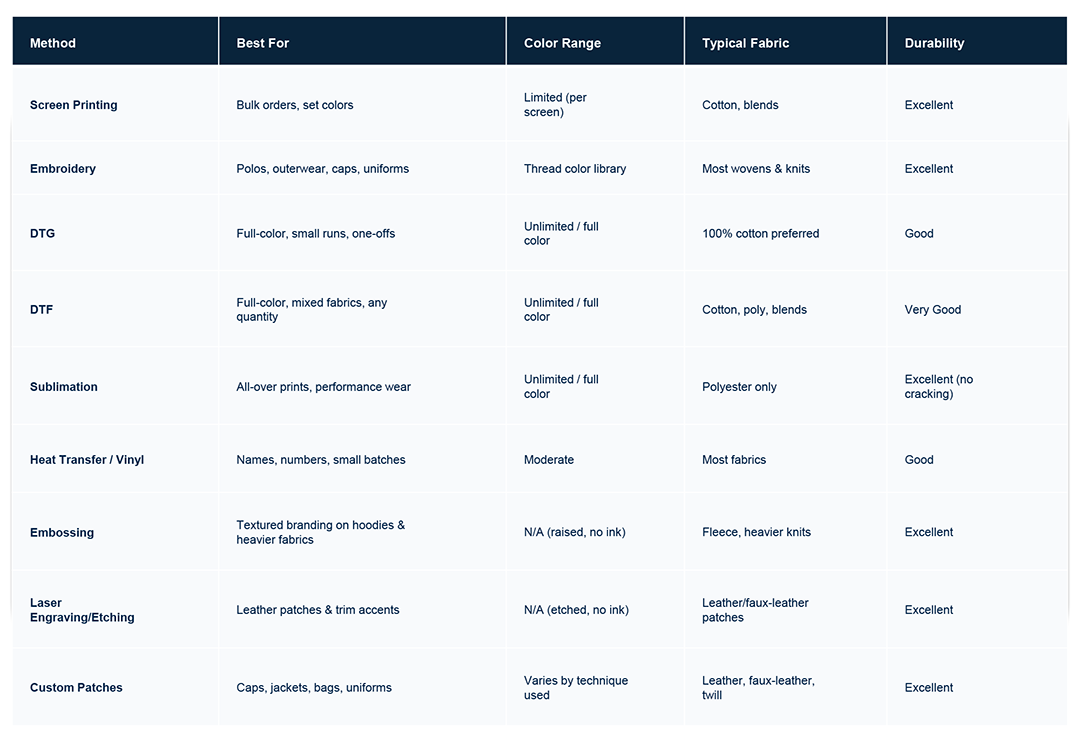
Quick Reference Guide
Select the right decoration method based on YOUR need.
Not Sure Which Garment You Want? Browse the Full Style & Color Catalog
Before you land on a final decoration plan, it helps to actually see what's out there. Our apparel catalog lets you browse styles, colors, and brands by category — tees, polos, outerwear, headwear, bags, workwear, and more — so you can bring us a style number or two (or just some ideas) instead of starting from a blank page.
- T-Shirts
- Polos & Knits
- Sweatshirts & Fleece
- Outerwear
- Caps & Headwear
- Activewear
- Woven & Dress Shirts
- Workwear
- Bags & Accessories
- Women's, Youth & Tall Sizing
This is a browsing tool to help you find the right garment, color, and brand — think of it as a source of ideas. Once you've found something you like (or just want help deciding), we'll take it from there on decoration, ordering, and production.
From Idea to Delivered Apparel
Tell Us What You're Picturing
Team gear, an event shirt, a full apparel program — share the goal and we'll ask the right questions.
We Match Garment to Method
Based on your design, quantity, and how the piece will be worn, we recommend what actually fits.
Proof and Approve
You see exactly what you're getting — placement, colors, garment — before anything goes into production.
Produced and Delivered
Fifty polos or a live storefront your whole team can order from — we handle it and get it where it needs to go.
What Our customers are saying
"The team at Integra Graphics goes above and beyond in terms of the level of service they provide and the quality of print and mail products and processes. I can trust them to take ownership of the project from begining to full completion and have nothing but positive things to say about working with them."
Chris Taft
"We have been working with Integra since 2019, and our business depends on all the great individuals there. They are indispensable to any size business looking to elevate its marketing material and presence."
Marshall Kramer
"Integra is one of our largest and most dependable vendors. They work closely with us and have a problem-solving and customer service-based mindset. Very grateful to work with the Integra team!"
Emily Martin
Apparel FAQ
What's the difference between DTG and DTF printing?
DTG prints ink directly onto the garment and works best on 100% cotton. DTF prints onto a film first, then heat-presses onto the garment, which means it works across more fabric types and blends. If your order mixes garment types or fabrics under one design, DTF is usually the more flexible choice.
Can I order just one shirt?
Yes. Methods like DTG and DTF are well-suited to single pieces or small runs, while screen printing becomes more cost-effective as quantity increases.
What's the best decoration method for a company logo on polos?
Embroidery is the standard for polos and other corporate wear — it holds up to repeated washing and gives a more premium, professional look than a printed logo.
Do you supply the garments, or do we provide them?
We typically source the garments as part of your order, so you're getting apparel and decoration matched from the start. If you have a specific brand or style in mind, let us know and we'll work with it.
How long does a typical apparel order take?
Timelines vary by decoration method, quantity, garment availability, and the current schedule at the decoration plant. Reach out with your target date and we'll let you know what's realistic. Start a chat with us.
What is a private label storefront, and is it right for my organization?
It's a branded online store built around products and logos you've approved, so your team, members, or supporters can order directly instead of you collecting individual orders. It works well for employee apparel programs, nonprofit and school spirit stores, and event merch.
Not Sure Which Decoration Method Fits Your Order?
Tell us what you're picturing and we'll help you land on the right garment and the right method — no pressure, no guesswork.