-1.png?width=702&height=262&name=Integra%20White%20(1)-1.png)
The July 12, 2026 USPS Rate Increase: Your Direct Mail Budget Just Changed
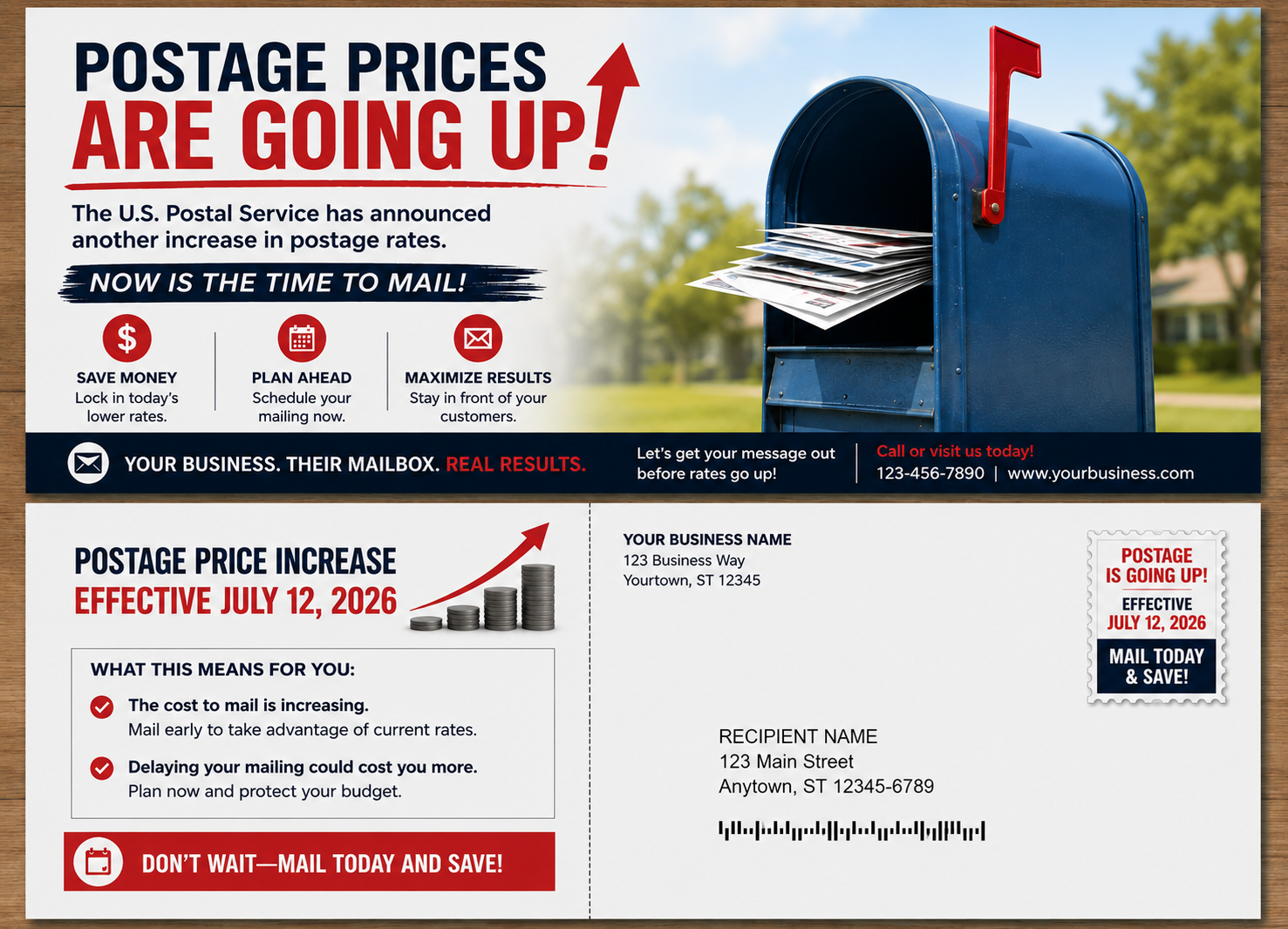
On July 12, 2026, USPS postage rates increase by an average of 4.8%—a shift that will directly impact your direct mail campaigns, budget forecasts, and marketing ROI calculations. For marketing directors overseeing integrated campaigns, this increase demands immediate attention and strategic response. USPS details
- The specifics—standard rates:
- First-Class Mail Forever stamps: $0.78 → $0.82 (5.1% increase)
- Metered letters: $0.74 → $0.78
- Postcards: $0.61 → $0.65
- Certified mail: $5.30 → $5.55
- First-Class Mail Pre-Sort rates (volume-dependent pricing):
- Pre-Sort Letters (3.5 oz. limit): $0.593–$0.672 → $0.621–$0.721
- Pre-Sort Flats (1 oz., increases per ounce): $0.970–$1.520 → $1.025–$1.590
- Standard Mail Pre-Sort rates (where eligible):
- Pre-Sort Letters: $0.372–$0.439 → $0.395–$0.467
- Pre-Sort Flats: $0.770–$1.185 → $0.783–$1.26
- Standard Mail Non-Profit rates (nonprofit organizations):
- Non-Profit Letters: $0.178–$0.245 → $0.185–$0.263
- Non-Profit Flats: $0.503–$0.918 → $0.516–$0.993
The increases vary by mail class and presort level, but the pattern is consistent: every mail stream is affected. A 10,000-piece postcard campaign increases from $6,100 to $6,500 in postage alone—a $400 swing that affects campaign margin and requires budget reallocation. Presort letters—often the backbone of volume campaigns—see similarly measurable cost increases across all volume tiers.
The Strategic Timing Decision
The critical question facing your team now is simple: execute planned direct mail campaigns before July 12, or absorb the higher costs post-increase? This decision hinges on your campaign pipeline and financial targets.
Pre-July 12 Advantage: If you've been considering autumn campaigns—holiday promotions, lead-gen mailers, customer retention pieces—accelerating them saves measurable dollars. With 2-4 week production timelines, initiating planning immediately positions you to lock in current rates. For high-volume drops using presort mail classes, this translates to meaningful bottom-line impact on campaign ROI. A 50,000-piece presort letter campaign saved at the lower rate structure could yield thousands in postage savings.
Post-Increase Reality: After July 12, recalculate your cost-per-piece across all mail classes and adjust your strategy—reduce volume, tighten targeting, compress frequency, or reallocate budget to complementary digital tactics. The math fundamentally changes, and your campaign economics must reflect it.
Making Direct Mail Work Harder Under Higher Costs
Higher postage costs don't diminish direct mail's effectiveness—they intensify the importance of precision. Your response strategy should center on three priorities:
List Quality Over Volume: When postage is more expensive, sending fewer, highly targeted pieces to your best-fit audience beats shotgun approaches. Invest in list segmentation, deduplication, and verification before every drop. The difference between mailing to 5,000 qualified prospects versus 7,000 mediocre ones becomes even more dramatic when postage costs rise. With presort rates rising across the board, precision targeting directly protects your margins.
Leverage USPS Cost Tools: Presort discounts for ZIP-code-sorted mail, EDDM saturation delivery for geographic targeting, and Standard Mail rates (where eligible) all reduce per-piece costs. These aren't new tactics, but under the new rate structure, they deserve renewed evaluation in your campaign planning. Presort letters and flats now require even more careful volume and targeting analysis to justify against standard rates.
Optimize Mail Piece Design: Postcards offer inherent economy over dimensional mailers. Single-piece letters over multi-piece campaigns. Presort-eligible flat formats over non-sortable designs. A strategy shift toward simpler, sortable formats can maintain effectiveness while controlling postage impact.
Direct Mail Still Delivers—Now It Just Costs More
Here's what shouldn't change: direct mail's place in your marketing mix. Physical mail commands attention in ways digital doesn't. Response rates typically run 3-5% for well-targeted campaigns, substantially outpacing email's ~1% baseline. In a crowded digital landscape, mail stands out precisely because it's physical and intentional.
The postage increase isn't a signal to abandon direct mail—it's a signal to be smarter about how you deploy it. Smaller volumes with tighter targeting. Strategic timing around seasonal peaks. Integration with digital retargeting. The tactical approach shifts; the strategic value remains.
Navigate with Confidence
At Integra Print & Promo, we help marketing directors across the Mid-Atlantic align direct mail strategy with postage realities. Our SynergyMail service bundles design, printing, and mailing logistics transparently, so you see all costs upfront—including presort discounts and mail class optimization—before campaign launch. No surprises when July 12 arrives.
Whether you're accelerating campaigns to beat the increase or planning 2026 strategy that accounts for higher costs, thoughtful planning now prevents budget chaos later. The increase is real, manageable, and better navigated with expert partnership.
Ready to put print to work for your business? Tell us what you're working on and we'll help you find the right materials at the right price — no pressure, no upsell.

Topics: